
9 Best Golf Cart Safety Upgrades for Families
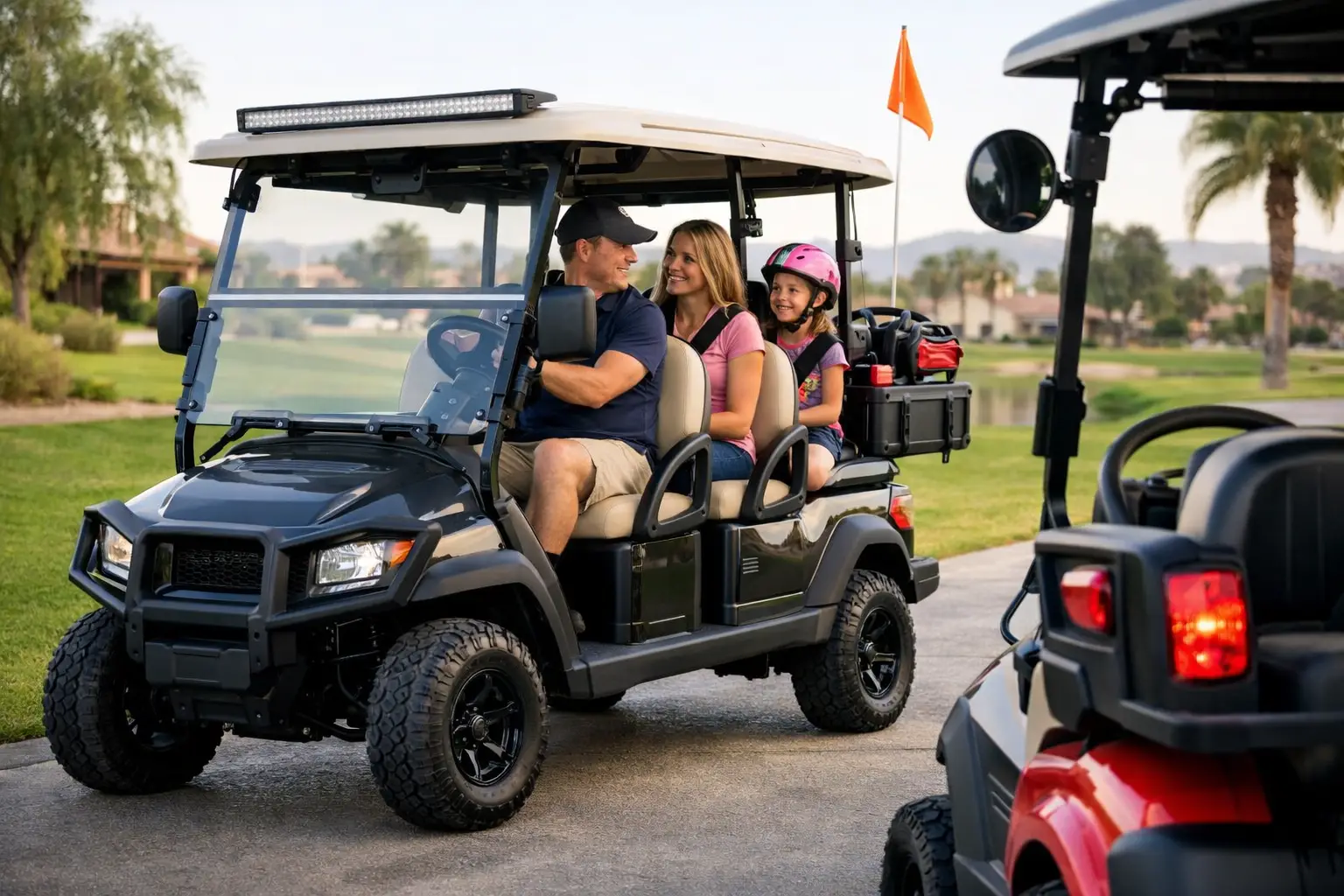
A golf cart can make school pickups, evening rides, and neighborhood visits far more enjoyable. But once the kids, grandkids, guests, or gear are on board, safety cannot be an afterthought. The best golf cart safety upgrades make a cart easier to see, easier to control, and more secure for every passenger - without taking away from the relaxed, premium experience that makes cart ownership so appealing.
The right choices depend on how and where you drive. A cart used exclusively around a private community has different needs than one used at dusk on wider neighborhood streets or for regular trips to the clubhouse. Start with the equipment that protects occupants and helps other people see you, then add features that suit your routine.
1. Seat Belts That Fit Every Passenger
Seat belts are one of the most practical upgrades for a family cart, particularly when children ride along or the cart travels on paved neighborhood roads. They help keep occupants positioned during turns, sudden stops, and uneven pavement. They also encourage a safer riding habit: every person is seated before the cart moves.
Choose belts designed for the seating configuration of your specific cart. Three-point belts offer more upper-body restraint than basic lap belts, though they may require a compatible mounting setup. A qualified technician should inspect the anchor points and installation. A belt is only useful when it is securely mounted, accessible, and easy for each rider to use.
Seat belts do not replace responsible driving. Keep speeds appropriate for passengers, avoid sharp turns, and never allow anyone to stand, sit on a rear-facing cargo area, or hang onto the side of the cart.
2. A Rearview Mirror and Side Mirrors
A good mirror setup improves awareness without requiring the driver to constantly turn around. A wide-angle rearview mirror is especially useful for monitoring passengers and seeing approaching bikes, carts, or vehicles. Side mirrors add visibility at intersections, while backing out, and when pulling over to let faster traffic pass.
For neighborhood use, adjustable side mirrors are worth the modest investment. They help accommodate drivers of different heights and reduce blind spots around the rear corners of the vehicle. Make it a habit to check mirror positioning before guests or family members take the wheel.
3. LED Headlights, Taillights, and Brake Lights
Visibility is not only about helping you see the road. It is about helping drivers, cyclists, walkers, and other cart owners see your vehicle early enough to react. Bright LED headlights, working taillights, and clearly visible brake lights are among the best golf cart safety upgrades for owners who enjoy sunset rides or travel through shaded streets.
LED lighting provides a crisp beam while drawing relatively little power. For the best result, have the lights aimed correctly. Headlights pointed too high can glare into oncoming traffic, while lights aimed too low may not reveal pavement edges, curbs, potholes, or pedestrians soon enough.
If your cart is operated after dark, local and state requirements may also apply. Equipment needs for street-legal or low-speed vehicle operation can vary by location, so verify the rules that apply to your community before heading onto public roads.
4. Turn Signals and a Horn
Hand signals are easy to miss, especially after dark or when a driver is focused on steering. A turn-signal kit gives other road users a clear indication of where you intend to go. This is particularly valuable at community intersections, parking areas, and shared paths where carts, cars, pedestrians, and bicycles regularly cross paths.
A horn is equally simple but valuable. It is not for rushing pedestrians or making noise around the neighborhood. It is a quick way to alert someone who is backing out, walking from behind a parked SUV, or distracted near a blind corner.
Look for a quality kit with an intuitive steering-column switch and an indicator visible to the driver. If signals are installed but difficult to use, they are less likely to become part of everyday driving habits.
5. A Windshield Built for Your Driving Conditions
A windshield protects passengers from wind, dust, insects, and unexpected debris. It can also make a cool morning or breezy evening ride far more comfortable, which means drivers are less likely to be distracted by stinging eyes or loose items blowing through the cabin.
The right style depends on your climate and storage situation. A folding windshield provides flexibility, while a full windshield offers more consistent coverage. Keep it clean and free of deep scratches, since glare from a damaged surface can interfere with visibility at sunrise or sunset.
A windshield should never be treated as a substitute for eye protection in every condition. If you drive in dusty areas or through active construction zones, appropriate eyewear remains a smart extra layer of comfort and protection.
6. Reliable Tires and Brakes
The most visible accessories get attention, but dependable tires and brakes do more for safe control than almost any cosmetic upgrade. Tires with worn tread, sidewall cracks, or improper pressure can reduce traction and make steering feel unpredictable. This matters on wet pavement, loose gravel, inclines, and turns with a full passenger load.
Use tires suited to your usual terrain. Street-focused tires are a strong fit for smooth neighborhood pavement, while all-terrain options can provide better grip on mixed surfaces. All-terrain tires can create a firmer ride and more road noise, so they are not automatically the best choice for every lifestyle.
Brake performance deserves regular attention as well. If the pedal feels soft, the cart pulls to one side, stopping distance has increased, or you hear grinding or squealing, schedule service before the next family ride. Routine inspections help identify worn components before they become a bigger repair or a preventable safety issue.
7. A Backup Camera or Reverse Alert
Golf carts are compact, but their rear visibility can be limited by passengers, rear seats, enclosures, coolers, or cargo. A backup camera gives the driver a better look at what is directly behind the cart. It is particularly helpful in busy driveways, garages, crowded event parking, and homes where children or pets may be nearby.
A reverse alert adds an audible cue when the cart is backing up. Some owners prefer a camera alone because it is quieter, while others value the additional warning in active areas. For families, the strongest approach is often both: a camera for the driver and an alert for people outside the cart.
Even with this technology, reverse slowly and look over your shoulder. Cameras can have blind spots, and no alert can replace an attentive driver.
8. Grab Handles, Secure Steps, and Quality Seating
Getting in and out of a cart should feel stable, not like a balancing act. Grab handles and well-secured step surfaces are meaningful upgrades for young children, older riders, and anyone with limited mobility. They can also keep passengers from grabbing the roof supports or moving parts as they enter.
Inspect the seating itself. Cushions should be firmly mounted, and rear-seat kits should include proper footrests and secure support. Premium upholstery is a welcome comfort feature, but its safety value comes from a stable seating position and materials that remain supportive over time.
Avoid adding passenger capacity simply because there is open space. Every rider needs a proper seat, a safe place for their feet, and restraint options when appropriate.
9. A Professional Inspection and Battery Check
Some of the most valuable safety work is not visible from the driveway. Electrical connections, steering components, suspension hardware, brake systems, and batteries all need periodic professional attention. On an electric cart, a healthy battery system supports predictable performance and helps prevent interruptions far from home.
A trained service team can also check whether aftermarket accessories were installed correctly and whether your cart's charging equipment is in good condition. Loose wiring, damaged chargers, and makeshift modifications can create reliability problems that are easily avoided with proper service.
At Oasis Carts, a technician-guided inspection can help owners prioritize upgrades based on how they actually use their vehicle, rather than adding accessories that look good but do little for daily confidence.
Build Safety Around the Way You Ride
The best upgrade plan is usually not a shopping spree. For a family cart, begin with seat belts, lighting, mirrors, tires, and brake condition. Add turn signals, a horn, and reverse assistance if you use neighborhood streets, active parking areas, or evening routes. Then consider comfort-focused additions such as a windshield, grab handles, and better steps.
Before every ride, take a few seconds to check that passengers are seated, the route is clear, and the cart has enough charge for the trip. That small routine, paired with thoughtfully selected equipment and regular maintenance, helps keep every ride relaxed, polished, and ready for the next stop.