
Can Golf Carts Drive Roads Legally?
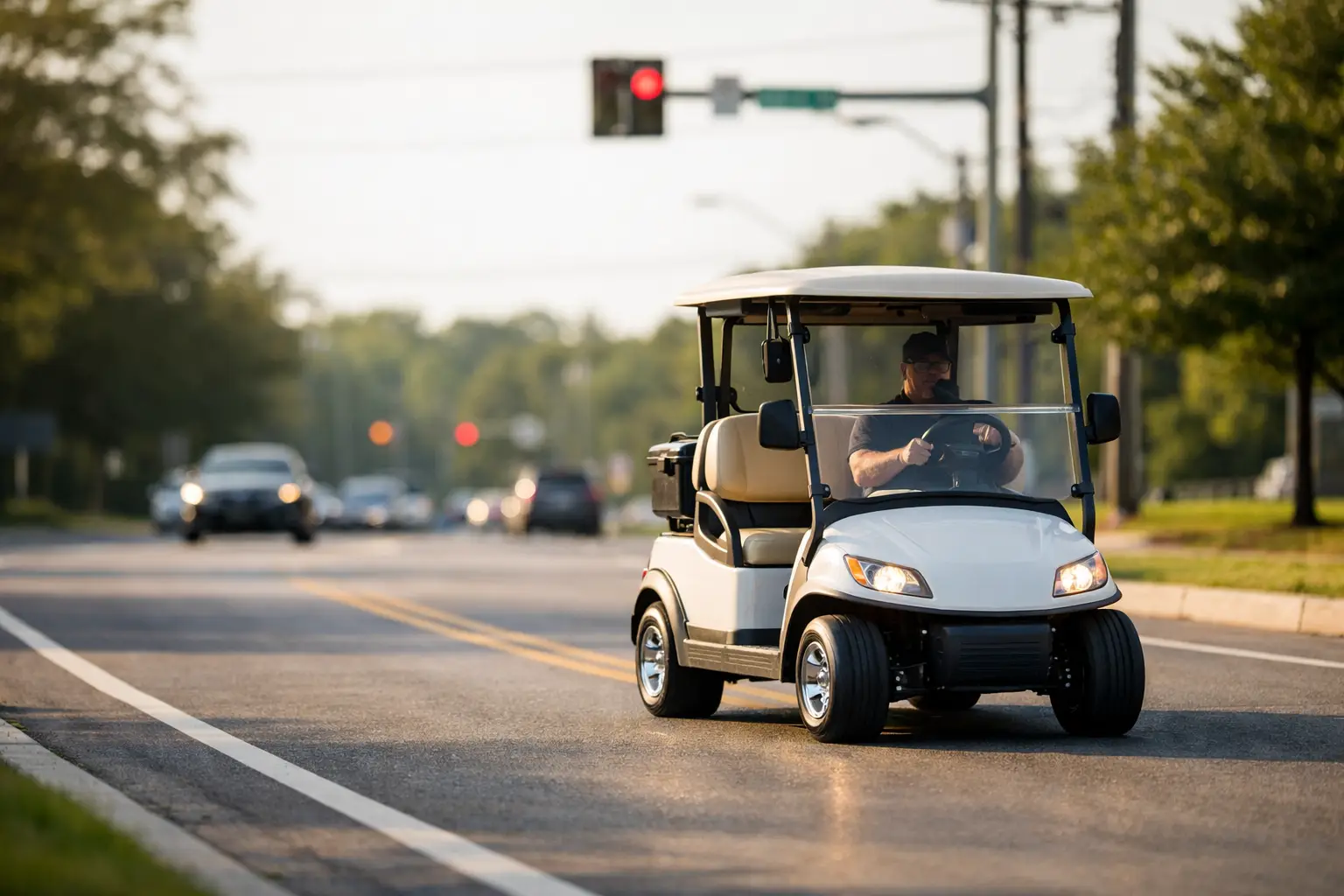
You spot a golf cart rolling through a neighborhood, crossing an intersection, maybe even heading toward a coffee shop, and the question comes up fast: can golf carts drive roads? The honest answer is yes, sometimes - but not just anywhere, and not under one universal rule. Where you live, how the cart is equipped, and what kind of road you mean all matter.
That gray area is where many buyers get tripped up. A golf cart that feels perfect for neighborhood cruising can be completely fine on one street and not legal two blocks later. If you're shopping for a cart for family transportation, leisure use, or local errands, it helps to understand the difference between a standard golf cart and a street-legal low-speed vehicle before you buy.
Can golf carts drive roads in the US?
In many parts of the US, golf carts can drive on certain roads, but usually only under local and state rules that limit where, when, and how they can operate. Most standard golf carts are not automatically legal for public road use. They are generally intended for private property, golf courses, gated communities, and designated neighborhood streets where local ordinances allow them.
The key point is that road access is usually restricted by speed limit, road type, and vehicle equipment. A residential street inside a planned community is very different from a city thoroughfare. Some towns are golf-cart friendly. Others allow them only with permits. Some do not allow them on public streets at all.
For buyers, that means the better question is not simply whether golf carts can drive roads. It is which roads, under what rules, and with what kind of vehicle.
The difference between a golf cart and a street-legal cart
This is the part that clears up most confusion. A standard golf cart is built primarily for low-speed use on private property. It may be ideal for a neighborhood, ranch, resort, or course, but it often lacks the equipment required for legal on-road use.
A street-legal cart is typically classified as a low-speed vehicle, or LSV. These vehicles are designed to meet a higher legal standard for certain public roads. They usually include required safety features such as headlights, taillights, brake lights, turn signals, mirrors, seat belts, a windshield, reflectors, a horn, and a vehicle identification number. They are also usually capable of a speed range that fits LSV rules.
That distinction matters because two carts can look similar from the outside and still fall under very different legal categories. If your goal is neighborhood mobility with occasional trips on approved streets, buying the right platform from the start is much easier than trying to retrofit the wrong vehicle later.
What roads can a golf cart use?
In most states, if golf carts are allowed on public roads at all, they are limited to roads with lower posted speed limits. Commonly, that means roads posted at 35 mph or less, though local rules can be tighter. Some areas allow crossing higher-speed roads at designated intersections but do not allow regular travel on them.
Private communities often have their own rules that are more flexible than city streets. Master-planned neighborhoods, retirement communities, beach towns, and resort areas may allow golf cart use on internal roads. In places with strong cart culture, local governments may establish designated routes, crossings, and operating hours.
The catch is that permission on one road does not mean permission everywhere nearby. You may be legal inside a neighborhood but not on the connecting road that gets you to the store, school, or clubhouse. That is why route planning matters just as much as vehicle choice.
Why local law matters more than people expect
State law sets the framework, but city and county rules often decide the real-world answer. Registration requirements, age limits, insurance expectations, and roadway restrictions can change from one municipality to the next.
For example, in Texas, golf cart use on public roads can be allowed in certain situations, but it depends heavily on the location and the type of road. In golf-cart-friendly communities, local rules may make ownership very convenient. In other areas, public road use may be much narrower than buyers expect.
That is why a dealership conversation should include how and where you plan to drive, not just what color or seat layout you want.
When a street-legal LSV is the smarter choice
If you want to use your vehicle beyond private property or occasional community cruising, an LSV often makes more sense. It gives you a cleaner path to legal use on approved public roads and tends to be the better fit for buyers who see their cart as real local transportation, not just a weekend toy.
That does not mean every customer needs one. If your driving will stay inside a private neighborhood or on personal property, a standard golf cart may be the right choice. It can be simpler and more affordable. But if you want flexibility, an LSV can save you from future frustration.
The trade-off comes down to use case. Standard carts can be excellent for short, casual trips in allowed areas. LSVs are usually better for owners who want broader capability, more safety equipment, and fewer question marks when using public streets.
Common legal requirements before driving on roads
If your area allows road use, there may still be conditions attached. Depending on the state and municipality, you may need registration, a permit, proof of insurance, and a valid driver's license. Some places also limit operation to daylight hours unless the vehicle has proper lighting.
You may also encounter age restrictions for drivers, passenger safety rules, and crossing limitations. For example, carrying children without appropriate restraints can be a separate issue from whether the cart itself is road-legal.
This is where buyers benefit from working with a knowledgeable dealership instead of guessing based on what neighbors are doing. Just because a cart is seen on the road does not mean it is legal there.
Safety matters even on low-speed roads
It is easy to think low speed means low risk. That is not always true. Neighborhood roads still include cars, cyclists, pets, parked vehicles, and distracted drivers. A cart used for family transportation should be chosen with visibility, braking, passenger comfort, and stability in mind.
Street-legal features are not just boxes to check for compliance. Headlights help with visibility in changing conditions. Mirrors improve awareness. Seat belts and turn signals make everyday driving more predictable and safer. Even if your local route is short, those features can make ownership feel much more practical.
Battery range matters too. A cart that performs well for a few loops around the block may not be ideal for a longer routine that includes multiple stops. The right setup depends on how often you plan to use it, how many passengers you carry, and whether hills or longer distances are part of your normal route.
What to ask before you buy
If road use is part of your plan, start with your local rules and your daily route. Ask whether your neighborhood streets are public or private, what the posted speed limits are, and whether your city requires registration, insurance, or special equipment.
Then ask vehicle-specific questions. Is this model a standard golf cart or an LSV? Does it come factory-equipped for street-legal use where permitted? What range should you expect under normal family use? Will the seating, storage, and suspension actually fit the way you live?
A premium cart should do more than look good in the driveway. It should match your routine, your local regulations, and your long-term ownership expectations. That is especially true for families and retirees who want dependable, everyday convenience rather than a vehicle that creates extra guesswork.
Can golf carts drive roads? Yes, but the right answer starts before purchase
The most useful answer is this: golf carts can drive on some roads, in some places, under specific conditions. If you want confidence, do not shop based on appearance alone. Shop based on legal fit, safety equipment, and how you actually plan to use the vehicle.
For many buyers, that means thinking beyond the phrase golf cart and looking at the full category of personal electric vehicles and LSVs. A well-matched cart can turn short local trips into one of the best parts of your day. The right one feels easy from the first drive, because it fits both your lifestyle and the rules of the road.