
Cart Battery Replacement Cost Example for Owners
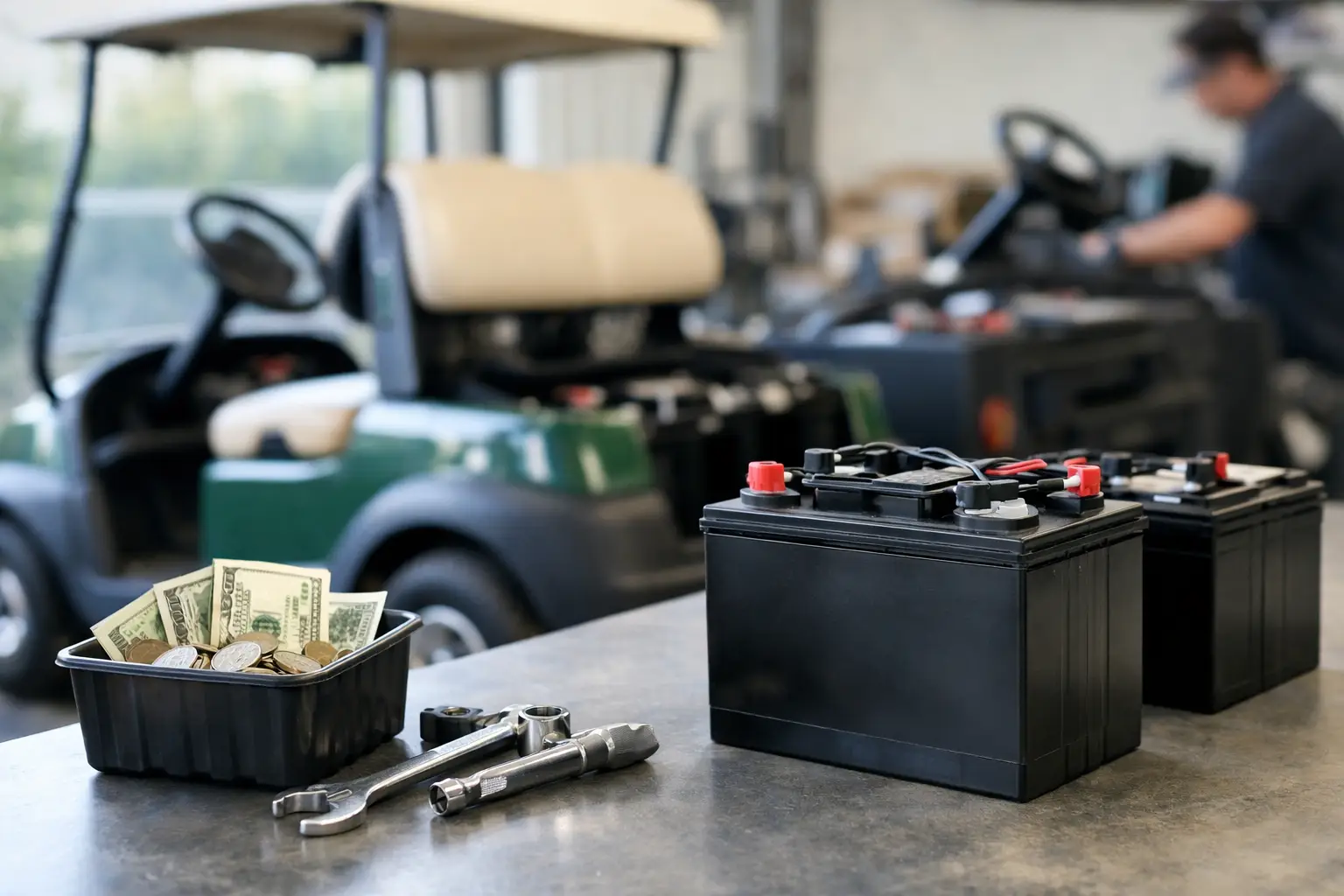
A cart that suddenly loses range can turn an easy neighborhood ride into a planning exercise. If you are budgeting for a new battery pack, a cart battery replacement cost example gives you a far clearer starting point than a single advertised battery price. The real total depends on your cart’s voltage, the battery chemistry, the capacity you need, and whether installation and disposal are included.
For many 48-volt golf cart owners, a professionally installed lead-acid battery replacement commonly lands around $1,600 to $2,500. A quality lithium conversion for that same cart can often fall between $3,200 and $5,200 installed. Those ranges are broad for a reason: the right battery setup should fit how you actually use your cart, not simply provide the lowest price at checkout.
A Realistic Cart Battery Replacement Cost Example
Consider a typical 48-volt personal golf cart equipped with six 8-volt flooded lead-acid batteries. If each battery costs $220 to $300, the battery portion of the replacement is approximately $1,320 to $1,800. Add professional labor, inspection, cable service if needed, and responsible recycling of the old batteries, and the final invoice may reach roughly $1,600 to $2,500.
That is a sensible choice for an owner who uses a cart for short local trips, golf-course driving, or occasional weekend fun and is comfortable following a regular charging and watering routine. Flooded lead-acid batteries remain a familiar, proven option, but their lower initial cost comes with more maintenance and a shorter expected service life than many lithium alternatives.
Now consider the same cart receiving a 48-volt lithium battery system. A reputable lithium pack with an integrated battery management system, proper charger, mounting hardware, and installation may cost $3,200 to $5,200. The upfront investment is higher, yet lithium can offer quicker charging, reduced weight, more consistent power, and less routine maintenance. For families using their cart every day around a large neighborhood or community, those advantages can change the ownership experience.
Why Battery Replacement Prices Vary So Much
A battery quote is only useful when you know what it includes. Two carts may both be labeled 48-volt, but one may require six 8-volt batteries while another uses eight 6-volt batteries. Lithium conversions add another layer because capacity, charger compatibility, and installation equipment can differ significantly.
Voltage and battery configuration
Most personal carts use 36-volt, 48-volt, or 72-volt electrical systems. Your new batteries must match the system voltage and be arranged correctly. A 36-volt cart might use six 6-volt batteries, while a 48-volt cart could use six 8-volt batteries or eight 6-volt batteries.
Do not choose batteries based only on physical size or the number printed on the label. The incorrect configuration can reduce performance, damage electrical components, or leave the cart unable to operate properly. A technician can confirm the system before replacement begins.
Lead-acid versus lithium
Lead-acid is typically the more budget-friendly route at the time of purchase. It is widely available, familiar to many service teams, and a practical option for light-to-moderate cart use. However, lead-acid batteries are heavy, require careful charging habits, and can need watering when using flooded batteries.
Lithium costs more initially but appeals to owners who value convenience and performance. It is substantially lighter, typically requires no watering, and maintains stronger voltage as the battery discharges. The trade-off is simple: lower cost today with lead-acid, or a larger initial investment for a lower-maintenance lithium setup that may serve you longer.
Capacity and real-world range
Voltage tells you what system a battery supports. Capacity, usually measured in amp-hours, helps determine how long it can power the cart. A higher-capacity battery can be valuable for a family cart carrying four to six passengers, a lifted cart with larger tires, or a vehicle used for frequent neighborhood errands.
Paying for more capacity than you need is not always a smart purchase. On the other hand, selecting a small battery pack for a cart loaded with accessories, speakers, lights, and passengers can lead to disappointing range. Your normal route, terrain, passenger load, and accessories should guide the recommendation.
Labor, cables, charger, and old battery disposal
The battery pack itself is not always the whole job. Corroded cables, worn hold-downs, damaged terminals, and an aging charger can affect both price and reliability. Lithium installations may require a charger designed for lithium chemistry, along with brackets or other fitment components.
Professional service also includes the less visible work: safely disconnecting the system, checking connections, securing the new batteries, testing charging behavior, and handling old batteries responsibly. That attention can prevent a replacement from becoming a second repair appointment a few weeks later.
What Owners Should Expect From Each Option
A lead-acid replacement can make excellent sense when the cart is used seasonally, driven short distances, and stored where regular charging is easy. It is also a practical choice when immediate replacement cost is the primary concern. With consistent care, a good lead-acid pack can provide dependable service, though its performance will gradually decline as it ages.
Lithium is often the better fit for drivers who want their cart ready for regular use with fewer maintenance tasks. Removing several hundred pounds of lead-acid battery weight can improve responsiveness and may be especially noticeable in carts with rear-facing seats, upgrades, or frequent passenger loads. Lithium also tends to deliver steadier power late in the charge cycle, so a cart is less likely to feel sluggish near the end of a ride.
Neither option is automatically right for every owner. The best choice comes down to driving habits, budget, desired range, storage conditions, and how long you plan to keep the cart.
How to Compare Battery Quotes With Confidence
When comparing replacement estimates, ask whether the quote covers the complete system rather than only the batteries. A clear quote should identify the battery type, voltage, capacity where applicable, charger requirements, installation, recycling or core charges, and any recommended cable or terminal replacement.
It is also wise to ask about warranty coverage and what maintenance is expected after installation. A lower quote may leave out the charger, labor, core charges, or hardware needed to complete the job. A higher quote may include a better battery, stronger capacity, professional installation, and warranty protection that better supports long-term ownership.
Avoid replacing only one or two batteries in an aging lead-acid pack. Batteries work as a set, and mixing old and new units can shorten the life of the new batteries while creating uneven charging and weaker performance. If most of the pack is near the end of its service life, replacing the full set is usually the more dependable decision.
Signs It Is Time to Plan for a Replacement
Reduced range is usually the first signal. If a cart that once handled a full afternoon of neighborhood driving now needs a charge after a short trip, the batteries deserve attention. Slower acceleration, dimming lights, trouble climbing modest grades, extended charging times, and visible corrosion are other common warning signs.
For flooded lead-acid batteries, check water levels only after charging and use distilled water when needed. Never overfill the cells, and never ignore low water levels. Proper care can extend battery life, but it cannot reverse normal aging.
A trained technician can test the pack and identify whether the issue is truly battery condition or a related charging, cable, or electrical concern. That diagnosis matters because the right repair is not always a complete battery replacement.
Oasis Carts helps owners make that decision with practical guidance, professional service, and battery options matched to the way each cart is driven. Whether your priority is a cost-conscious lead-acid refresh or a premium lithium upgrade, the goal should be the same: a cart that feels ready whenever the next ride calls.