
Epic vs Kandi Golf Carts: Which Fits You?
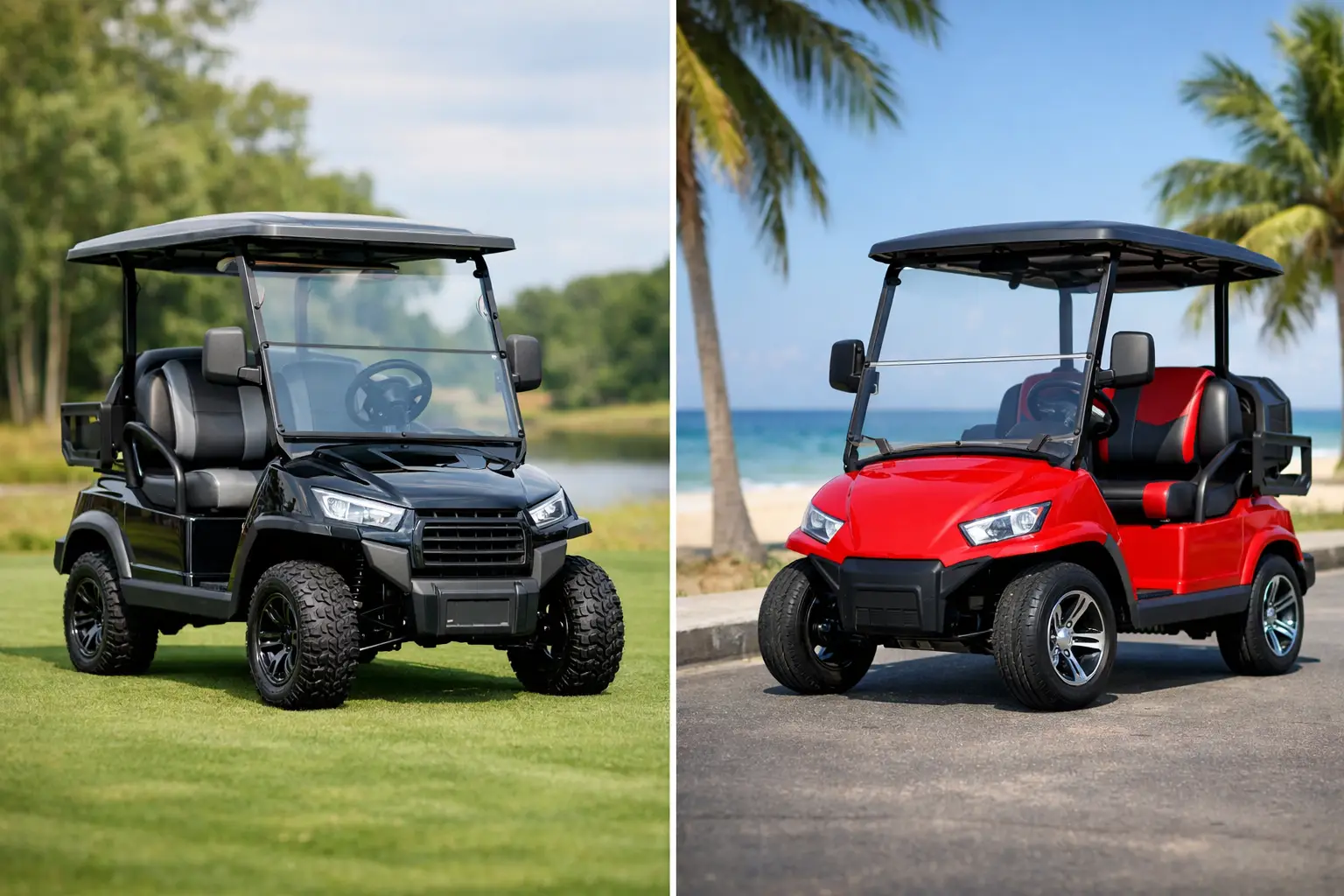
A cart can look great in the driveway and still be the wrong fit for the way your family actually uses it. That is why an Epic vs Kandi golf carts comparison should start with your routine: school runs through the neighborhood, evening rides with friends, trips around a large property, or relaxed weekends at the course. Both brands offer electric carts with lifestyle appeal, but their trims, available equipment, and ownership experience can feel quite different.
For many buyers, the decision comes down to priorities. Epic often appeals to shoppers who want a polished, feature-forward cart with a premium road-ready feel. Kandi can be a compelling option for buyers looking for practical electric transportation, approachable value, and a cart suited to lighter recreational use. The right answer depends less on the badge and more on the cart's exact configuration, battery system, seating needs, and the support behind the sale.
Epic vs Kandi Golf Carts at a Glance
Epic and Kandi both serve the growing market for personal electric vehicles, yet neither brand should be treated as one single product. A two-seat model and a lifted four- or six-seat model can have very different ride quality, range expectations, tire setups, storage, and street-use equipment.
Epic carts are commonly positioned toward buyers who want an elevated neighborhood vehicle experience. Depending on the model, shoppers may find features such as automotive-style lighting, digital displays, upgraded seating, premium wheels, rear cameras, Bluetooth audio, and lithium battery power. The appeal is easy to understand: these carts are designed to feel like a purposeful part of your lifestyle, not just a basic way to get from one tee box to the next.
Kandi carts often attract buyers who want useful, electric mobility without building every decision around premium appointments. Available features vary by model and dealer package, but Kandi can make sense for a homeowner, recreational user, or family that wants comfortable local transportation and values a straightforward ownership proposition.
Neither approach is automatically better. A feature-rich Epic may be ideal for a family that uses its cart several days a week. A properly equipped Kandi may be exactly right for occasional neighborhood rides, property use, or a buyer with a more defined budget.
Comfort and Everyday Lifestyle Use
Comfort is one of the fastest ways to separate a cart you enjoy from one that spends most of its time parked. If your typical ride is a quick five-minute loop, almost any well-built cart may feel adequate. If you plan to carry kids, guests, coolers, golf bags, or groceries over longer distances, the details matter much more.
Epic models frequently lean into comfort and visual presence. Spacious seating layouts, refined upholstery, color-matched bodywork, and larger wheel-and-tire packages can create a more upscale experience. On certain models, independent front suspension and enhanced seating can also make rough pavement, speed humps, and neighborhood streets more pleasant. That said, lifted carts with aggressive tires may ride differently from low-profile street-oriented models, even within the same brand.
Kandi buyers should pay close attention to the specific seat configuration, suspension setup, and tire package rather than assuming all carts ride alike. A compact two-seat cart can be nimble and easy to store, while a larger four-passenger configuration gives families more flexibility but requires more garage space and a wider turning area.
Before buying either brand, sit in every seating position. Check rear-seat legroom, grab handles, roof coverage, entry height, and how easily passengers can get in and out. Retirees, grandparents, and young children often notice these practical details long before they care about a larger display screen.
Performance, Battery Type, and Range
Battery technology is central to the Epic vs Kandi golf carts decision. Many modern lifestyle carts are offered with lithium power, while some configurations or older inventory may use lead-acid batteries. Lithium batteries generally offer faster charging, less routine maintenance, lower weight, and more consistent power delivery. They can also carry a higher upfront price.
Range should never be treated as a universal number. It changes with passenger weight, hills, tire pressure, weather, terrain, speed, battery age, and accessories. A cart driven gently on flat neighborhood streets will usually travel farther than the same cart carrying four adults up grades with oversized tires.
Instead of asking only, “How far does it go?” ask how you will use it on a typical busy day. Add up school drop-offs, clubhouse trips, neighborhood visits, and rides around your community. Then leave a comfortable margin rather than choosing a cart at the edge of your needs.
Speed also deserves a practical conversation. Some carts are configured for private property or golf-course use, while others may include equipment intended for certain low-speed road applications. Local rules still control where a cart can legally operate. Headlights, turn signals, mirrors, a windshield, seat belts, a horn, and a vehicle identification number do not automatically make every cart legal on every street. Buyers in Texas and Florida should confirm their local and community requirements before planning regular road use.
Features: Premium Convenience or Practical Essentials?
This category often favors Epic for shoppers who want more standard-style amenities and a more customized look. Depending on the model, Epic carts may offer a long equipment list that supports daily neighborhood use, from lighting and mirrors to entertainment features and upscale trim details. Those touches can make a real difference when the cart replaces short car trips or becomes the preferred ride for family outings.
Kandi may be the better fit when your definition of value is centered on essential transportation. A cart does not need every available accessory to be useful, safe, or fun. If your needs are a comfortable seat, dependable electric power, room for passengers, and practical storage, paying for extra technology may not be necessary.
There is a trade-off here. More equipment can improve convenience and resale appeal, but it can also mean more components to learn and maintain. Ask which features are factory-installed, which are dealer-added, and how warranty coverage applies to each one. A transparent answer is more valuable than a long feature list.
Service, Warranty, and the Cost of Ownership
The purchase price is only one part of owning an electric cart. Battery coverage, parts availability, scheduled inspection needs, tire wear, charger care, and access to trained service technicians all shape the long-term experience.
This is where buying from an established dealership can offer meaningful peace of mind, whether you choose Epic or Kandi. A knowledgeable team can explain the differences between trims, verify what is included on the exact cart you are considering, and help you understand warranty terms before you sign. They can also provide support if an accessory, charger, brake system, or electrical component needs attention later.
For either brand, request clear answers about the battery warranty, vehicle warranty, maintenance recommendations, and the service process if you are outside the dealership's immediate area. If you are comparing carts that appear similarly priced, one may include a stronger battery package, more installed equipment, or more complete after-sale support. Those differences can matter far more than a small gap on the sticker.
At Oasis Carts, the best conversations begin with how you plan to use the vehicle, not with pressure to choose the most expensive model. A test drive is especially valuable because steering feel, braking, suspension response, visibility, and seat comfort are difficult to judge from photos.
Which Cart Should You Choose?
Choose an Epic if you want a more premium, feature-driven cart for frequent neighborhood use, family rides, entertaining, or a highly styled personal transportation vehicle. It can be a strong choice when comfort, technology, appearance, and a finished automotive-inspired feel are high on your list.
Choose a Kandi if your priorities are practical electric mobility, recreational use, and a configuration that meets your needs without paying for features you may rarely use. It can be a smart route when the exact model offers the seating, battery capacity, and equipment you need at a price that feels comfortable.
The most satisfying cart is not necessarily the one with the biggest screen, the tallest lift, or the longest list of accessories. It is the one that fits your passengers, your routes, your storage space, and the way you want to spend your weekends. Take the time to test-drive both, compare the actual vehicles side by side, and choose the cart that makes you want to take the long way home.