
Choosing Golf Carts for Gated Communities
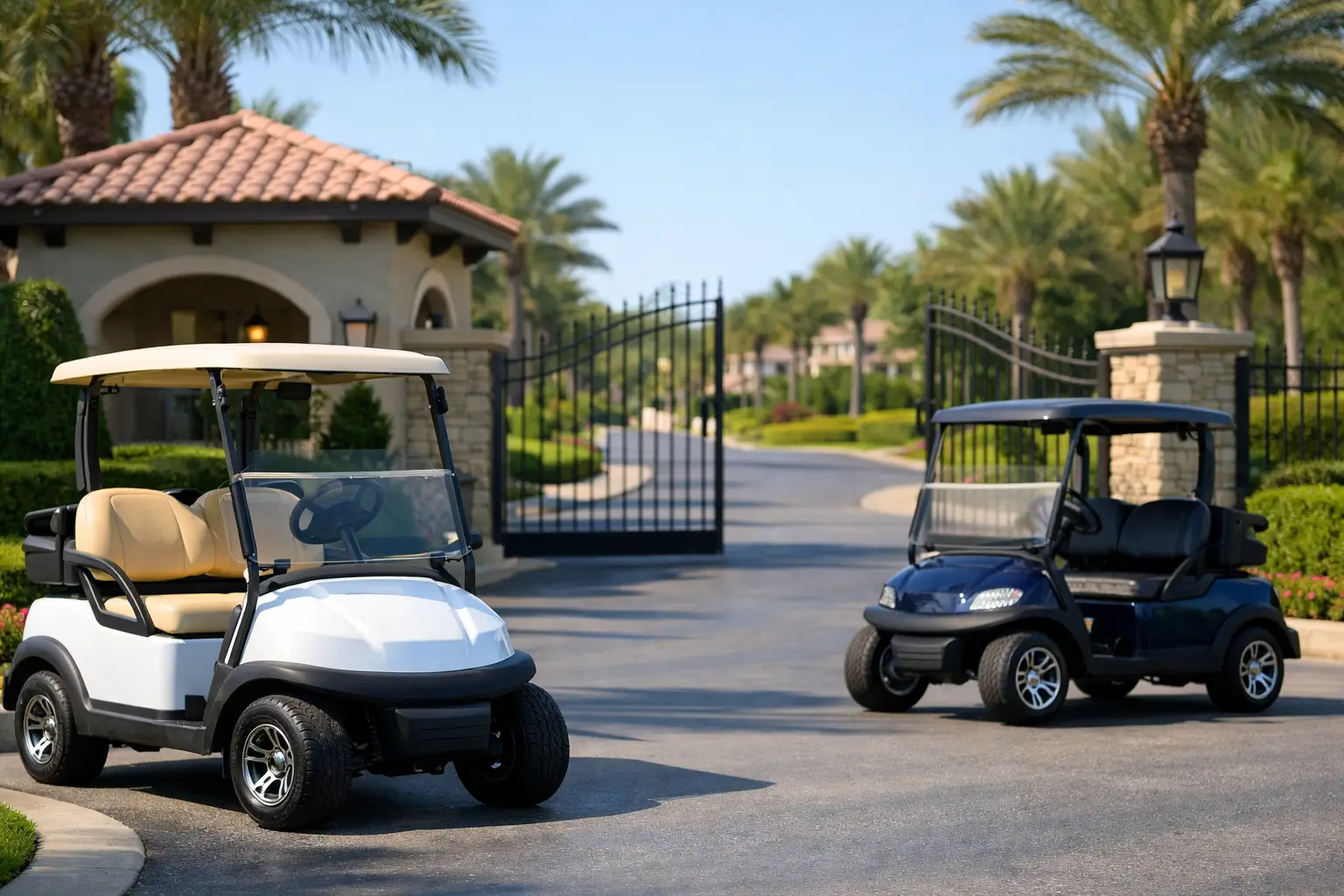
A gated community changes the way a cart gets used. It is not simply a vehicle for a round of golf or an occasional ride to the clubhouse. Golf carts for gated communities become the preferred way to visit neighbors, take the kids to the pool, carry groceries home, walk the dog, and enjoy an evening loop without starting the car.
That makes choosing the right cart less about finding the lowest price and more about finding a vehicle that feels comfortable, dependable, and appropriate for the way your household actually moves. The best choice should feel like a natural extension of your neighborhood lifestyle - polished enough for guests, practical enough for errands, and backed by service you can count on.
Start With How Your Community Uses a Cart
Before comparing colors, wheels, or seat materials, consider the routes your cart will travel most often. A compact two-seat cart can be ideal for a couple making short trips to the mailbox, tennis courts, or clubhouse. For families, grandparents, or homeowners who regularly bring friends along, a four- or six-passenger model usually offers more value from day one.
Think beyond passenger count, too. If the cart will handle pool bags, coolers, groceries, or lawn-and-garden supplies, rear-facing seats that convert into a cargo bed can be especially useful. A cart that looks great but cannot carry what your family needs will quickly feel limiting.
Community terrain matters. Flat, paved streets place fewer demands on a cart than hilly roads, long drives, or routes with frequent stops. In larger communities, range becomes a bigger part of the decision. A dealer can help match battery capacity, motor performance, and charging expectations to the actual distances you plan to travel.
Choose Seating for the Life You Actually Live
Many buyers begin with a four-passenger cart because it is a versatile middle ground. It has room for family and friends without taking up as much garage space as a larger model. But six-passenger golf carts can make more sense for households with several children, frequent visitors, or a social calendar built around neighborhood gatherings.
Do not overlook comfort. Premium seating, supportive backrests, ample legroom, and a smooth suspension can turn a quick ride into a genuine part of the day. This matters even more for retirees, passengers with limited mobility, and anyone who plans to enjoy longer rides around the neighborhood.
A test drive is the fastest way to spot the differences that specifications alone cannot show. Pay attention to ride quality over speed bumps, how easily the steering turns, visibility from the driver's seat, and whether everyone can get in and out comfortably. A cart should be easy to enjoy for the person driving and every passenger riding along.
Safety Features Should Be Part of the Shopping List
A gated entrance does not eliminate the need for safe driving. Children, walkers, pets, cyclists, delivery vehicles, and other carts all share community streets. Well-equipped golf carts for gated communities should be selected with real neighborhood conditions in mind.
Look for reliable seat belts, mirrors, headlights, brake lights, turn signals, and a horn. A rearview camera can make backing out of a driveway or parking near a busy clubhouse much easier. Windshields, roofs, and weather enclosures add comfort while improving visibility and keeping riders protected when the forecast changes.
For families, seating position matters as much as capacity. Every passenger should have a secure place to sit, hold on, and buckle up. Children should never ride on laps, stand on the rear platform, or use an area not designed for passengers. Establishing simple household rules early helps make the cart a source of fun rather than a preventable safety concern.
Street-Legal and Community Rules Are Different Things
Some communities allow standard golf carts on private streets. Others require specific equipment, registration, insurance, or a street-legal low-speed vehicle configuration. Local and state rules may also apply once a cart leaves private property, even for a short trip to a nearby store or restaurant.
Ask your HOA or property management team about permitted operating areas, age restrictions, parking rules, speed limits, and required safety equipment before you buy. Then discuss those requirements with a knowledgeable dealership. The right vehicle may be a neighborhood-focused cart, or it may be an LSV equipped for the roads you intend to use. It depends on where and how you plan to drive.
Electric Power Makes Neighborhood Travel Easy
Electric carts are a natural fit for residential communities because they are quiet, easy to operate, and free from gas station stops. Plugging in at home gives owners a simple overnight charging routine, much like charging other personal devices and vehicles.
Battery choice affects convenience, performance, and long-term ownership costs. Lithium batteries are popular for their lighter weight, consistent power delivery, fast charging potential, and reduced maintenance needs. They often cost more up front, but many owners appreciate the everyday convenience and longevity. Other battery systems can still be a sensible option for buyers with lighter-use needs or a tighter initial budget.
The right answer depends on your driving habits. A household taking a few short rides each week has different requirements than one using a cart daily for school drop-offs, amenities, errands, and evening rides. Be honest about your expected use, then choose enough range to avoid constantly watching the battery gauge.
Make It Feel Like It Belongs at Home
A premium cart can be personal without becoming impractical. Exterior color, custom wheels, upgraded upholstery, LED lighting, sound systems, and enclosed cabins allow owners to create a vehicle that fits their home and their style. In a community where carts are part of the social scene, those details can make each ride feel more enjoyable.
Still, prioritize useful upgrades first. A quality roof, windshield, storage compartments, cup holders, phone charging, and all-weather protection usually add more everyday value than cosmetic accessories alone. If you enjoy late-afternoon rides, consider lighting that makes dusk travel more comfortable. If you live in a warm climate, ventilation and cooling features may deserve a higher spot on the list.
Storage deserves a quick check before purchase. Measure your garage space, including clearance around doors and shelving. If you plan to transport the cart to a vacation property or use a trailer, confirm dimensions and weight as well. A little planning prevents an exciting delivery from becoming a parking puzzle.
Buy for Ownership, Not Just Delivery Day
A cart is more enjoyable when help is available after the sale. Warranty coverage, trained technicians, inspections, battery service, and access to repairs all matter over time. The dealership relationship is especially valuable for first-time owners who want a clear answer when a warning light appears, a charger has a question, or routine maintenance is due.
Transparent pricing also matters. Ask what is included in the quoted price, whether the cart has the equipment your community requires, how warranty service works, and what maintenance is expected. Financing can make it easier to choose the seating, battery technology, and safety features that fit your plans now rather than settling for a cart you may outgrow quickly.
At Oasis Carts, buyers can compare premium electric models across several brands and work with a team focused on matching the cart to the household, not forcing every customer into the same configuration. That guidance is valuable when a four-passenger cart, six-passenger model, or street-legal option all seem close on paper.
Your ideal cart should make a simple neighborhood trip feel like a small upgrade to the day. Take a test drive, bring the people who will ride most often, and choose the vehicle that gives your community life more comfort, confidence, and reasons to head outside.