
How to Charge Golf Cart Batteries Right
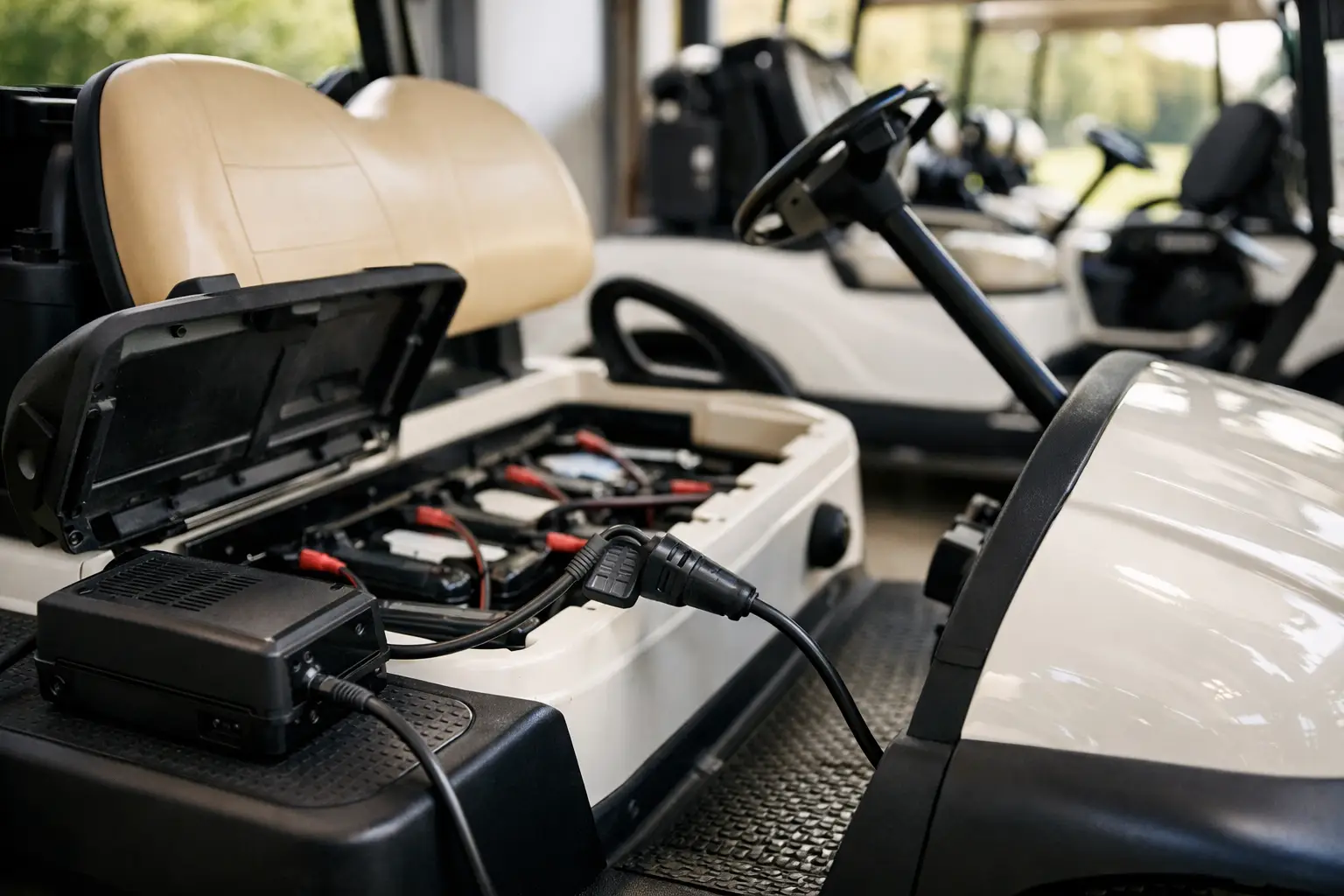
A golf cart that feels slow, quits early, or needs constant attention usually is not asking for a major repair. More often, it is asking for better charging habits. If you want to know how to charge golf cart batteries the right way, the goal is simple - protect battery life, get dependable range, and avoid the kind of wear that shortens ownership value.
For many owners, charging feels like the easy part. Plug it in, walk away, and assume the charger handles the rest. Sometimes that works. Sometimes it quietly leads to undercharging, over-discharging, or battery damage that shows up months later. A premium cart deserves better than guesswork, and so does your time.
How to charge golf cart batteries step by step
Start by confirming what type of battery system your cart uses. Most personal golf carts run on lead-acid batteries, including flooded lead-acid, AGM, or gel, while many newer premium carts use lithium batteries. The charging process is similar at a high level, but the details matter. The wrong charger or the wrong charging routine can shorten battery life fast.
Before plugging anything in, park the cart in a dry, well-ventilated area. Turn the cart off and set the parking brake. If you have lead-acid batteries, pop open the battery compartment and take a quick look for corrosion, loose cables, cracked cases, or fluid leaks. If something looks off, charging is not the first problem to solve.
Next, make sure the charger matches your battery pack voltage and chemistry. A 48-volt charger is not interchangeable with a 36-volt system, and a lithium charger should not be used on a lead-acid pack unless the manufacturer specifically says it is compatible. This is one of the most common mistakes we see from owners trying to keep things simple.
Once everything checks out, connect the charger to the cart and then to the power source if your charger instructions call for that order. Some chargers start automatically. Others need a moment to recognize battery voltage before beginning the cycle. Let the charger run until it completes the cycle on its own. For most carts, that means waiting until the charger shuts off or indicates a full charge rather than unplugging early because the cart seems "good enough."
That last part matters. Partial charging can be fine for lithium in certain situations, but lead-acid batteries perform best when they are fully recharged after use. Stopping the cycle too soon, again and again, tends to reduce available capacity over time.
The best time to charge your golf cart
The best time to charge depends on how you use the cart and what battery type you own. For lead-acid batteries, the safest habit is to charge after every meaningful use. If you took the cart around the neighborhood, used it for an evening event, or spent the day at a property or course, plug it in when you get home. Lead-acid batteries do not like sitting in a partially discharged state.
Lithium batteries are a little more flexible. They do not suffer from the same memory issues people worry about with older battery technologies, and they generally tolerate partial charging better. Even so, regular charging is still smart if you want your cart ready when plans change.
What you want to avoid with either system is running the batteries all the way down. Deep discharges create more stress, especially for lead-acid packs. If your cart is noticeably slowing down or the battery gauge is approaching empty, recharge it soon rather than squeezing out one more trip.
How long should charging take?
Charging time depends on battery type, charger output, battery age, and how far the batteries were discharged. A typical lead-acid golf cart may need anywhere from six to ten hours for a full charge. Lithium setups are often faster, though that depends heavily on the charger and battery management system.
If charging suddenly starts taking much longer than normal, that is worth paying attention to. It can mean the batteries are aging, water levels are low in flooded lead-acid batteries, or the charger is not performing correctly. A charger that finishes suspiciously fast can also be a red flag, especially if your cart is not delivering normal range afterward.
How to charge golf cart batteries without shortening battery life
Good charging is not just about getting back to 100 percent. It is about building habits that support long-term performance.
For flooded lead-acid batteries, keep the water level in the proper range, but do it at the right time. In most cases, you should check water after charging, not before, because electrolyte levels rise during the charge cycle. Only use distilled water, and do not overfill. Too much water can cause overflow during charging and lead to corrosion.
Keep battery terminals clean and secure. Corrosion creates resistance, and resistance creates heat and inefficiency. A battery pack with dirty or loose connections may charge poorly even when the charger itself is fine.
Use the charger designed for your cart whenever possible. Aftermarket chargers can work well, but compatibility is not something to guess at. Smart chargers that taper output and shut off automatically are a major advantage because they help prevent overcharging.
Temperature also plays a role. Charging in extreme heat or cold can affect battery performance and charging efficiency. If you live in Texas or Florida, where garages can get hot, try to charge in a shaded, ventilated area rather than in a sealed space that traps heat.
Common charging mistakes owners make
One of the biggest mistakes is leaving a lead-acid cart discharged for days or weeks. That encourages sulfation, which reduces battery capacity and can eventually ruin the pack. If the cart is not used often, a regular charging schedule still matters.
Another mistake is assuming all battery gauges are perfectly accurate. Many are more like rough estimates than precision instruments. If your cart has been used heavily, trust your charging routine more than a single dash reading.
Using extension cords is another area where it depends. A short, heavy-duty cord may work when absolutely necessary, but a thin or overly long cord can reduce charger performance and create safety concerns. Direct wall power is always the better choice.
Owners also sometimes unplug too early because they are in a hurry. That is understandable, but repeated short charging sessions are harder on lead-acid systems than full cycles. If your lifestyle calls for quick turnarounds and frequent use, lithium may simply be the better fit.
Charging for storage and seasonal use
If you are storing your cart for a while, charging strategy becomes even more important. For lead-acid batteries, store the cart fully charged and continue maintaining the charge during storage based on manufacturer guidance. Letting the pack sit and slowly drain is one of the fastest ways to shorten battery life.
For lithium batteries, storage recommendations vary by manufacturer. Some prefer storage at less than a full charge, often around the mid-range, while others have very specific standby instructions through the battery management system. This is one of those moments where generic advice is not enough. Follow the battery maker's recommendations, especially for extended off-season storage.
If you are not sure what your cart needs, a quick service check is far less expensive than replacing a neglected battery pack.
When charging problems point to something bigger
If your charger will not start, the batteries never seem to reach full charge, or the cart loses range quickly after charging, the problem may not be your routine. It may be a weak battery, a failing charger, cable resistance, onboard computer issues, or a battery pack that has aged out.
A battery set should also be considered as a system. Replacing one weak lead-acid battery in an older pack can sound cost-effective, but it often leads to uneven performance. The newer battery gets pulled down by the older ones, and the older ones limit the benefit of the replacement. Sometimes the cheapest fix upfront is the more expensive path over time.
This is where professional support matters. A trained technician can test voltage under load, inspect cable integrity, verify charger output, and tell you whether the issue is maintenance, repair, or replacement. That kind of clarity is part of protecting the ownership experience, not just the cart itself.
The charging routine that works best for most owners
For most personal-use golf cart owners, the ideal routine is straightforward. Use the correct charger, plug in after each meaningful outing, let the charger finish its cycle, keep the batteries clean, and stay ahead of small issues before they become expensive ones.
If your cart uses flooded lead-acid batteries, check water levels regularly and use distilled water only. If your cart uses lithium, follow the battery maker's charging and storage guidance instead of assuming all lithium systems behave the same way.
A well-charged cart is not just more convenient. It is more enjoyable to own. You get better range, more consistent performance, and fewer unpleasant surprises when it is time for an evening ride, a neighborhood cruise, or a family weekend out.
When battery care becomes part of the routine, everything else about ownership feels easier. And that is exactly how it should be.