
How to Inspect Used Golf Cart Before Buying
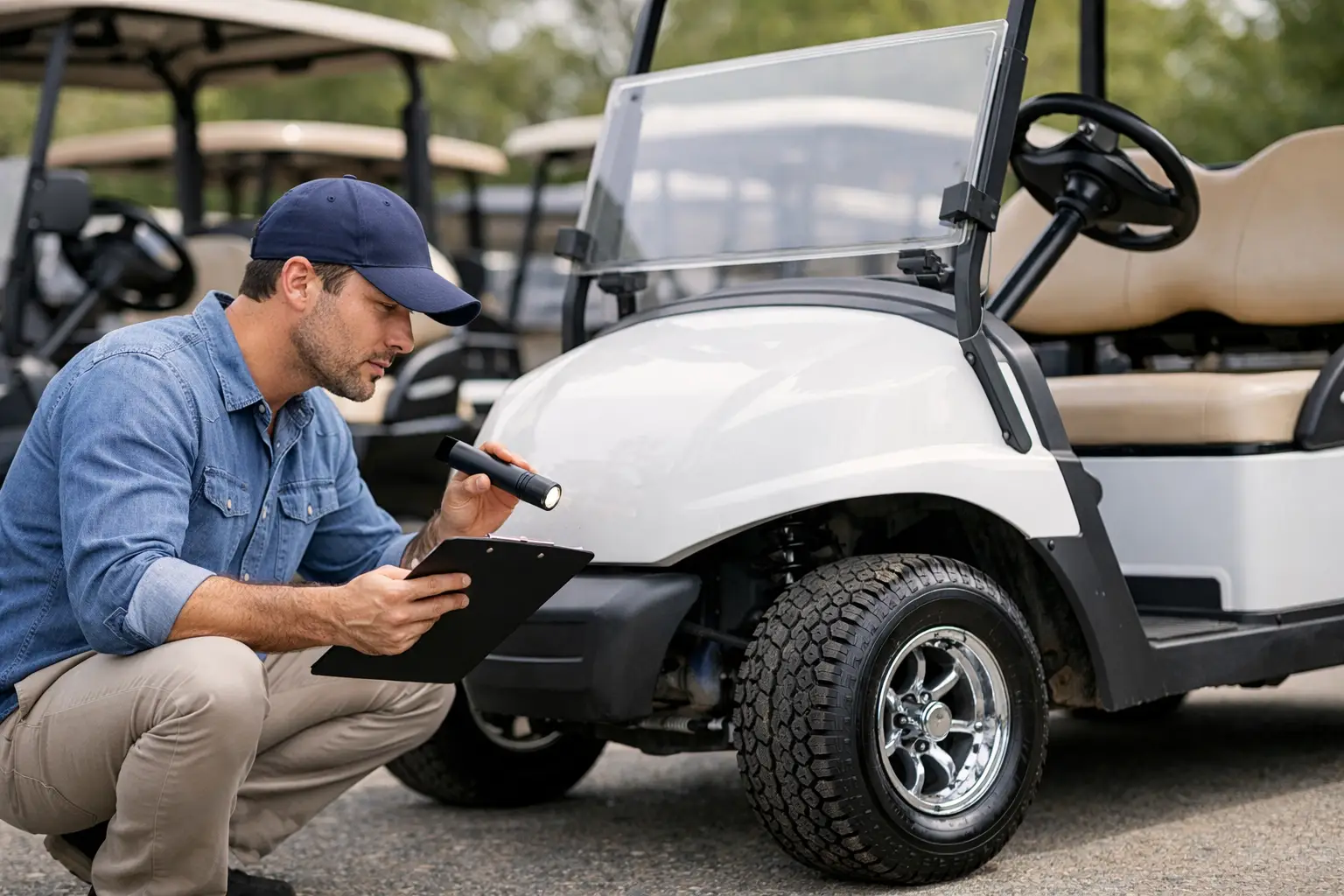
A used golf cart can look fantastic in photos, then turn into a costly project the minute it hits your driveway. That is why knowing how to inspect used golf cart options properly matters so much. A careful inspection helps you separate a well-kept cart from one that has been cleaned up just enough to sell.
For most buyers, this is not about becoming a technician overnight. It is about knowing where problems usually hide, what wear is normal, and when a low asking price is really a warning sign. If you are shopping for a neighborhood cruiser, a family cart, or a weekend leisure vehicle, a smart inspection gives you confidence before you commit.
How to inspect used golf cart like a confident buyer
Start with the cart cold, before it has been driven around to mask issues. Sellers sometimes warm up a cart first because noises, weak acceleration, and battery problems can be easier to hide after a short run. You want to see how it starts, how it responds, and how it behaves from the very beginning.
Walk around the cart slowly and look at the overall condition. A clean body does not always mean a clean bill of health, but it does tell you something about ownership habits. If the seats, roof, floorboard, and body panels all show reasonable care, there is a better chance the mechanical side received attention too.
That said, cosmetic flaws are not always deal-breakers. Minor scratches, faded trim, or a worn seat bottom are common on used carts. Structural damage, neglected batteries, steering slop, or signs of water intrusion are where you need to pay close attention.
Check the frame and underbody first
The frame tells a more honest story than the paint. Kneel down and inspect underneath the cart for rust, bends, fresh welds, or areas that look recently painted over. Surface rust can be manageable, especially in humid climates, but heavy corrosion on the frame or suspension mounting points is a bigger concern.
Look for evidence of impact damage. A used cart that has spent time in neighborhoods or on private property may have clipped curbs, landscaping borders, or trailer ramps. If the frame looks uneven or the front end parts do not match side to side, ask more questions.
If you are buying in coastal or high-humidity areas, corrosion deserves extra scrutiny. Salt air and moisture can age metal faster than many buyers expect.
Inspect the batteries on an electric cart
For electric models, the battery pack is one of the most important parts of the inspection. It is also one of the most expensive components to replace. If the batteries are aging out, that bargain price may stop looking like a bargain.
Open the battery compartment and check for corrosion around terminals, frayed cables, cracked battery cases, and any signs of acid leakage. Corrosion alone does not always mean the cart is bad, but heavy buildup can point to poor maintenance. Ask when the batteries were installed and whether they are lead-acid or lithium.
Battery age matters. Lead-acid batteries typically have a shorter useful life than lithium and need more regular maintenance. A cart with newer lithium batteries may justify a higher price, while a cart with an old lead-acid pack may need a replacement sooner than you would like. If the seller cannot tell you the battery age or provide service records, factor that uncertainty into your offer.
Pay attention to charging habits too. Ask whether the cart stayed plugged in properly, how often water levels were checked on lead-acid batteries, and whether the charger is included. A missing or incorrect charger is not a small detail.
How to inspect used golf cart controls and electrical systems
Turn the key on and test every basic function. Check the headlights, brake lights, turn signals, horn, display, USB ports, and any added accessories. If the cart has a lifted setup, sound system, or custom lighting, make sure those add-ons were installed cleanly rather than wired together as an afterthought.
Messy wiring is one of the easiest ways to inherit future headaches. Loose connections, electrical tape patches, or random switches mounted without labels can signal poor-quality modifications. Custom features can be a plus, but only when they are done correctly.
Test forward and reverse engagement. The cart should shift or select direction without unusual hesitation, grinding, or delay in response. If the vehicle jerks hard on takeoff, cuts power unexpectedly, or feels inconsistent, there may be issues with the controller, motor, solenoid, or battery performance.
Drive it long enough to notice the small things
A two-minute spin around a parking lot is better than nothing, but it is not enough. Drive the cart long enough to check acceleration, braking, steering feel, ride quality, and any unusual noises. If possible, test it on a slight incline, over a few turns, and at different speeds.
Listen for rattles, squeaks, clunks, or whining sounds. Some tire noise or light suspension noise can be normal on used carts, especially lifted ones, but loud or repeated mechanical sounds deserve attention. The cart should track straight, steer predictably, and stop without pulling to one side.
Brakes should feel firm and consistent. If the pedal feels soft, goes too far down, or makes the cart shudder when stopping, the brake system may need service. On a used cart, that is not unusual, but it should affect how much you are willing to pay.
Look closely at tires, suspension, and steering
Tires reveal both wear and alignment history. Uneven tread wear can point to alignment problems, suspension wear, or a cart that has been driven hard. Dry cracking on the sidewalls means replacement may be coming soon even if tread remains.
Check the suspension for worn bushings, leaking shocks, or loose components. If the cart is lifted, inspect the quality of the lift kit and how it was installed. A lift can improve style and ground clearance, but it can also add stress to steering and suspension if done poorly.
Steering should not feel vague or excessively loose. A little play may be normal on some older carts, but if you are constantly correcting the wheel to stay straight, there is likely wear somewhere in the steering system.
Inspect the body, seats, and roof with realistic expectations
Cosmetics matter, especially if you are buying a cart for family use, entertaining, or everyday neighborhood driving. Check for cracked body panels, mismatched paint, seat tears, roof damage, and loose trim pieces. Cosmetic repairs are usually simpler than powertrain repairs, but they still add cost.
Try to separate what is merely used from what is truly neglected. A few scuffs on a pre-owned cart are expected. Missing hardware, broken seat backs, sagging cushions, and a roof that rattles every time you hit a bump suggest a lower standard of care.
If appearance is a top priority, remember that some cosmetic upgrades are easy while others are not. Seats and wheels are straightforward compared with major bodywork or replacing a damaged canopy frame.
Ask for the paperwork you actually need
A used cart inspection is not only physical. It should include the story behind the cart. Ask for the serial number, year, brand, battery installation date, charger information, repair history, and any warranty details that may still apply.
If the seller is vague about ownership, maintenance, or recent repairs, be careful. Transparency is part of what makes a used cart worth buying. A seller who can clearly explain service history and answer direct questions usually inspires more confidence than one who leans on phrases like runs great and needs nothing.
It also helps to ask where the cart was used. A cart that spent its life on flat neighborhood streets may show different wear than one used heavily on rough property or in wet conditions. Neither is automatically bad, but usage history matters.
Know when a deal is too cheap
Price should make sense relative to age, condition, battery type, and brand. If one cart is dramatically cheaper than similar models, assume there is a reason until proven otherwise. Sometimes that reason is cosmetic. Sometimes it is a battery pack, electrical issue, or title of repairs waiting for the next owner.
This is where buying from a reputable dealership can make a meaningful difference. A professional inspection, clear pricing, and service support remove much of the guesswork that comes with private-party buying. For many families and first-time buyers, that confidence is worth more than squeezing out the absolute lowest upfront number.
A good used cart should feel solid, predictable, and honestly represented. If anything about the inspection feels rushed, inconsistent, or hard to verify, pause before moving forward. The right cart is not just one that looks sharp on day one. It is one that is ready for the kind of easy, enjoyable ownership you actually want.