
Lithium Versus Lead Acid Carts Explained
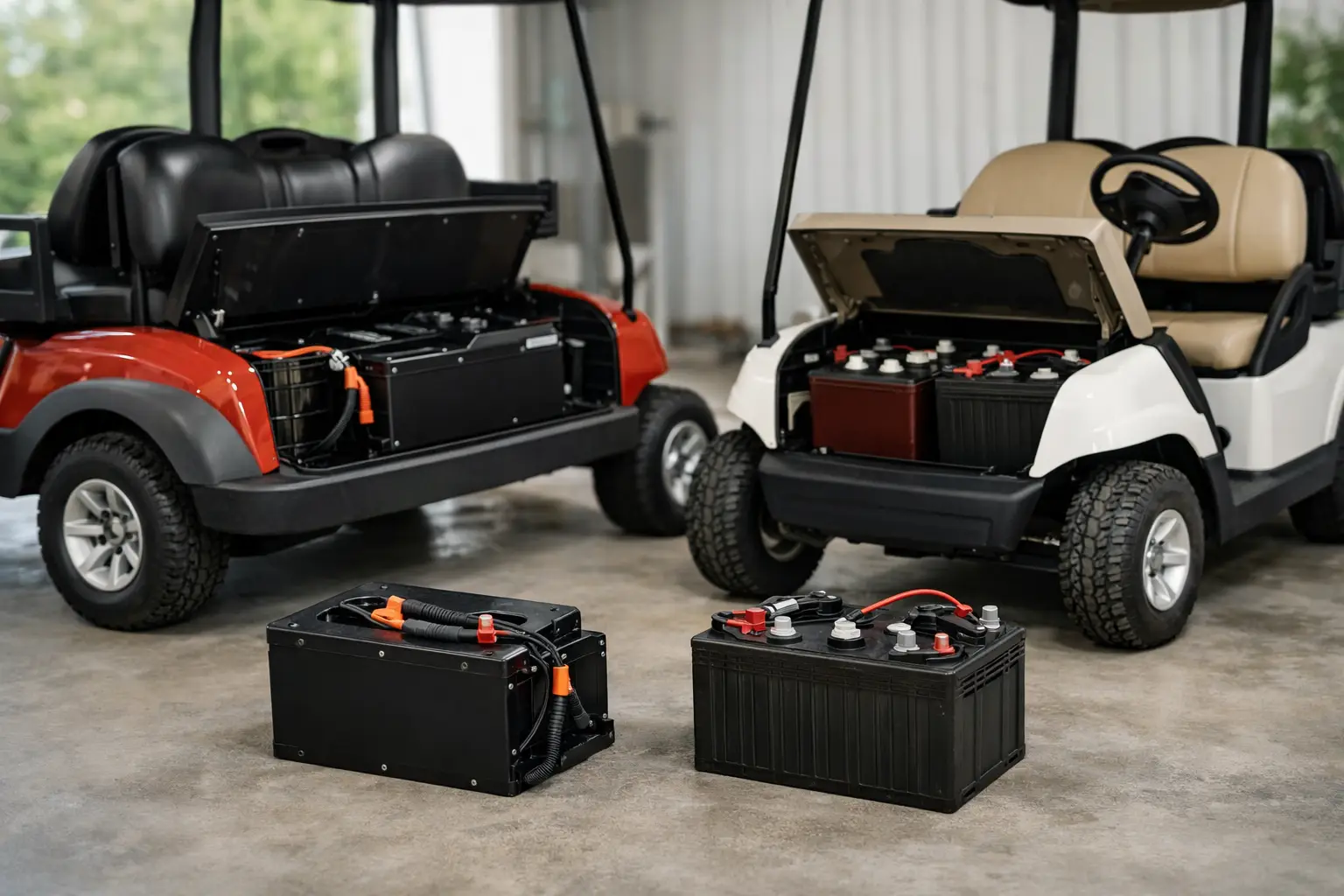
If you have ever test-driven two similar golf carts and wondered why one feels quicker, lighter, and easier to live with, the battery is usually the reason. When buyers ask about lithium versus lead acid carts, they are really asking a bigger question: which setup will feel better to own a year from now, not just on delivery day.
For most personal-use buyers, this choice shapes daily convenience more than almost any feature on the cart. Seats, wheels, and paint matter. But battery type affects range, charging time, maintenance, long-term cost, and even how confidently your cart handles neighborhood hills or a full load of passengers.
Lithium versus lead acid carts: the real difference
At a glance, both battery types do the same job. They power the motor, lights, and accessories so your cart can get you around the neighborhood, course, campground, or community. The difference is in how they deliver that power over time.
Lead acid batteries are the traditional option. They have been used in golf carts for years, and many buyers are familiar with them. They usually cost less upfront, which makes them attractive when initial budget is the main concern.
Lithium batteries are the newer premium option. They tend to be lighter, charge faster, require less maintenance, and hold performance more consistently as the battery drains. For buyers who want a cleaner ownership experience, lithium often feels like a major upgrade rather than a small technical change.
Upfront price versus long-term value
This is where the decision gets real. Lead acid carts usually win on purchase price. If you are comparing two carts side by side, the lead acid version will often look like the better deal at first glance.
But first glance is not the whole story. Lead acid batteries typically need more maintenance and generally have a shorter service life than lithium. That means replacement costs can arrive sooner, and there is a good chance you will spend more time dealing with watering, cleaning terminals, and managing charging habits carefully.
Lithium costs more upfront, but many buyers see that extra investment pay off in convenience and longevity. If you plan to keep your cart for years, use it often, or simply want fewer ownership hassles, lithium can make more financial sense over time. It is not always the cheaper option on paper on day one, but it often becomes the smarter value for active owners.
Performance on the road and around the neighborhood
The easiest way to describe the driving difference is this: lithium usually feels more confident.
Because lithium batteries are lighter, the cart has less weight to carry. That can help with acceleration, responsiveness, and efficiency. It can also improve the feel of the cart when you have passengers onboard or when you are climbing mild inclines around a neighborhood or private community.
Lead acid carts can still perform well, especially for lighter-duty use. But as those batteries discharge, you may notice a drop in power or consistency. That softer feel near the end of a charge is one of the most common ownership complaints.
Lithium batteries typically deliver steadier voltage throughout the charge cycle. In plain terms, your cart tends to feel more like itself for longer. If you use your vehicle for family rides, errands around the neighborhood, or longer recreational trips, that consistency matters.
Charging time and daily convenience
This is another category where lithium stands out.
Lithium batteries generally charge faster than lead acid, which makes them easier to live with if your cart gets frequent use. If your family uses the cart in the morning, then again in the evening, faster charging can be the difference between ready to go and waiting around.
Lead acid batteries usually need more charging time and a bit more discipline. They do best when charged properly and consistently. Missed charging habits or repeated deep discharges can shorten battery life.
For many homeowners, retirees, and recreational buyers, battery convenience matters more than they expected. You are not just choosing a spec sheet. You are choosing whether ownership feels simple or a little fussy.
Maintenance: how much attention do you want to give your cart?
Some buyers do not mind battery upkeep. Others want the easiest possible ownership experience. That preference should absolutely factor into the choice.
Lead acid batteries need regular maintenance. Depending on the setup, that can include checking water levels, cleaning corrosion, and making sure the battery pack stays in good condition. Skip that care, and performance and lifespan can suffer.
Lithium batteries are much lower maintenance. There is no routine watering, and the system is generally cleaner and easier to manage. For buyers who want a premium cart that feels polished from day one through long-term ownership, lithium lines up naturally with that expectation.
This is especially relevant for people who use a golf cart as a lifestyle vehicle rather than a hobby machine. If you want transportation for the neighborhood, pool, pickleball courts, or local events, low-maintenance ownership is a real benefit.
Battery lifespan and replacement cycles
Battery life is one of the biggest reasons buyers move toward lithium.
Lead acid batteries can deliver solid service, but they typically wear out sooner. Their lifespan depends heavily on usage patterns, charging habits, climate, and maintenance. In hotter states like Texas and Florida, those conditions can put added stress on batteries, which makes proper care even more important.
Lithium batteries generally last longer and handle regular use better. For buyers planning to keep their cart for the long haul, that longer service life can be a major advantage. You may pay more upfront, but you may also avoid replacing batteries as soon as you would with lead acid.
If you are buying a cart as a long-term family vehicle, not a short-term seasonal toy, this category deserves real weight in the decision.
When lead acid still makes sense
Lithium gets a lot of attention, and for good reason. Still, lead acid is not automatically the wrong choice.
If your cart will be used lightly, your budget is tight, and you are comfortable with routine maintenance, lead acid can still be a practical option. It remains a familiar and proven battery type, and many owners are perfectly happy with it for shorter rides and moderate use.
Lead acid can also make sense for buyers who prioritize the lowest upfront cost and understand the trade-offs going in. The key is buying with clear expectations instead of assuming all battery systems feel the same to own.
When lithium is worth the upgrade
Lithium is usually the better fit for buyers who want strong everyday performance with less upkeep. If you plan to drive often, carry multiple passengers, use accessories, or keep the cart for years, the benefits become easier to justify.
It is also a strong choice for shoppers who are already leaning premium in other areas. If you care about ride quality, convenience, and long-term ownership confidence, lithium fits that mindset. The battery supports the overall experience, not just the vehicle's specs.
For many buyers, especially those choosing a neighborhood or lifestyle cart, lithium simply feels more aligned with modern expectations. You plug in, charge up faster, enjoy steadier performance, and spend less time thinking about battery care.
How to choose between lithium versus lead acid carts
The right answer depends on how you actually plan to use your cart.
If you want the most affordable entry point and do not mind hands-on maintenance, lead acid may serve you well. If you want easier ownership, longer battery life, faster charging, and a more premium driving feel, lithium is usually the stronger option.
That is why a good dealership conversation matters. The best battery choice is not based on hype. It is based on your route lengths, passenger count, storage setup, charging habits, and how long you plan to keep the vehicle. A family using a cart daily around the neighborhood may reach a different answer than a buyer using it occasionally on weekends.
At Oasis Carts, this is one of the most important buying conversations because battery type affects the ownership experience long after the first test drive. The right match should fit your lifestyle just as much as your budget.
A better cart is not always the one with the lowest sticker price. It is the one that still feels like the right decision after months of family rides, errands, and easy evenings around the neighborhood.