
New Golf Carts Versus Refurbished Carts
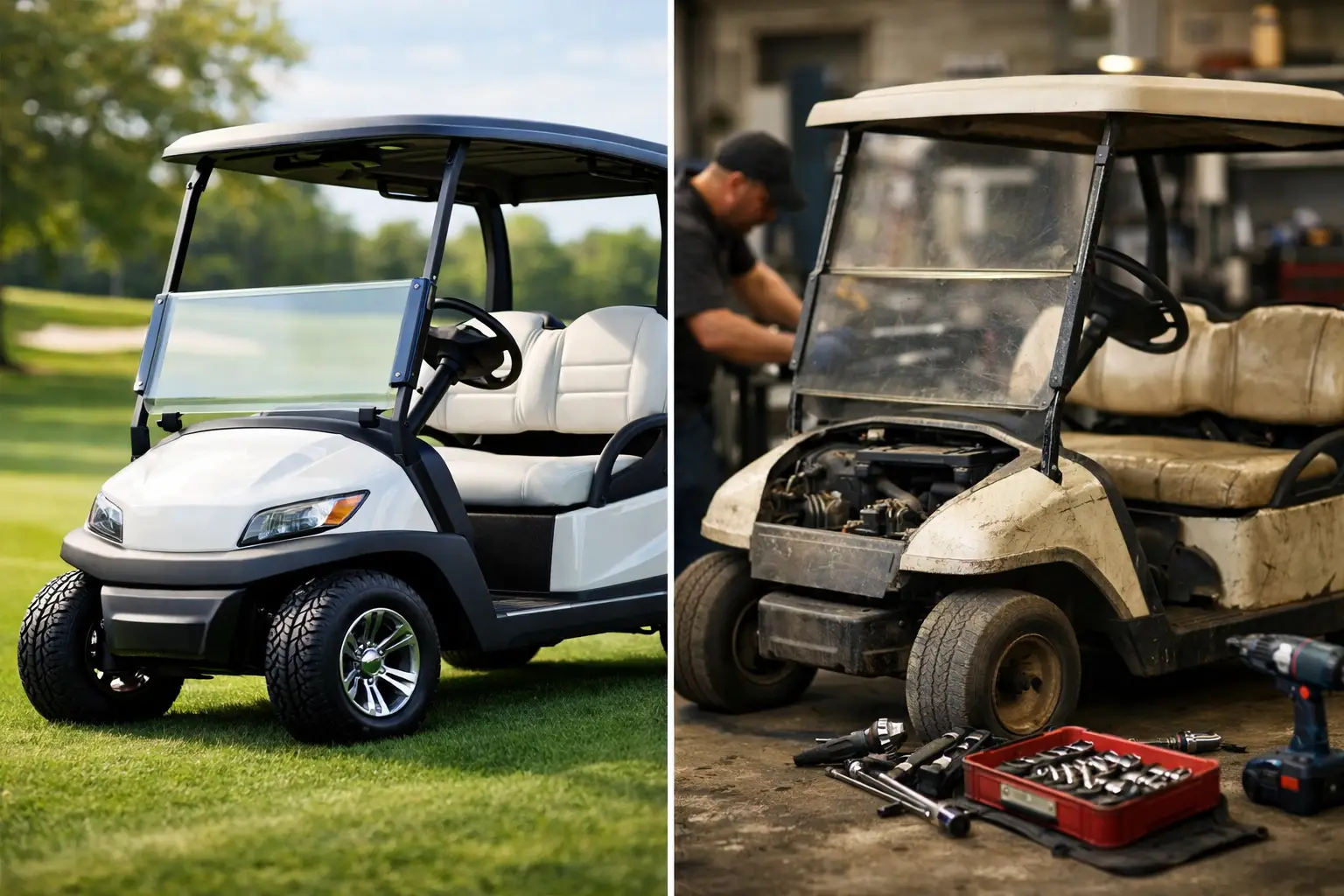
A golf cart purchase often starts with a simple question: should you buy new, or save money with a refurbished model? When comparing new golf carts versus refurbished options, the right answer is less about finding the lowest sticker price and more about choosing the ownership experience that fits your family, neighborhood, and plans for the years ahead.
A new cart can bring current styling, modern technology, full warranty coverage, and the freedom to select the colors and features you want. A quality refurbished cart can offer practical value, especially for buyers who prioritize dependable transportation over having the newest model. The key is knowing exactly what has been renewed, what remains original, and what support comes after the sale.
New Golf Carts Versus Refurbished: The Real Difference
A new electric golf cart is built as a complete, unused vehicle. Its batteries, electrical system, suspension components, seats, tires, body panels, and accessories all begin with zero prior wear. Depending on the model, it may include features that have become increasingly valuable for neighborhood and recreational use, such as lithium power, touchscreen displays, backup cameras, LED lighting, upgraded seating, Bluetooth audio, and enhanced suspension.
A refurbished golf cart is a previously owned vehicle that has been reconditioned for resale. That definition can mean very different things from one seller to another. At one end of the spectrum, a cart may receive a fresh coat of paint, new seat covers, and a basic cleaning. At the other, it may undergo a detailed inspection with replacement batteries, tires, brakes, bushings, electrical components, and cosmetic parts.
That difference matters. A cart that looks showroom-ready is not automatically a thoroughly rebuilt cart. The value of a refurbished model depends on the quality of the inspection, the condition and type of its batteries, the age of the underlying vehicle, and the dealer standing behind the work.
When a New Cart Makes More Sense
For buyers who want a cart to feel like an extension of their home or lifestyle, new is often the easier choice. You know its complete history because there is no prior history. You also have a clearer baseline for maintenance, battery performance, and warranty protection from day one.
New carts are especially appealing when you plan to use one frequently. A family that drives to neighborhood pools, school events, local restaurants, golf courses, or friends’ homes will likely appreciate the comfort and convenience of a newer model. More seating, smoother suspension, premium wheels, weather protection, and modern lighting can make every ride more enjoyable, not just more functional.
Full Warranty Coverage Adds Confidence
Warranty coverage is one of the strongest reasons to consider new. Terms vary by manufacturer and component, but a new vehicle generally includes protection for major systems and provides a straightforward path if a covered issue arises. That can be reassuring when you are financing a cart or expect it to serve as regular personal transportation.
A warranty does not eliminate maintenance needs, but it can reduce the financial uncertainty that comes with early ownership. It also gives buyers confidence that the manufacturer and selling dealer are invested in the cart’s long-term performance.
You Can Choose the Features That Matter
Buying new also gives you more control over the finished vehicle. Rather than accepting the seating layout, color, battery system, or accessories chosen by a previous owner, you can select a cart around how you will actually use it.
For some buyers, that means a four-passenger cart for daily neighborhood rides. For others, it means six seats for grandkids, a lifted stance for recreational property use, or lithium batteries for efficient charging and consistent performance. A new cart may cost more upfront, but choosing the right configuration at the beginning can prevent costly compromises later.
Where Refurbished Carts Deliver Value
A refurbished cart can be a smart purchase when the work has been done properly and the vehicle fits your expectations. Buyers may get an attractive, capable cart at a lower initial price, leaving room in the budget for accessories, transportation, insurance, or future upgrades.
This route can work well for occasional use. If you want a cart for short rides around a gated community, trips from a parking area to a dock, or casual golf course use, a refurbished model may provide everything you need without paying for the latest technology.
The best refurbished purchase is not necessarily the cheapest one. It is the one with clear documentation, a realistic condition assessment, and a dealer who can explain what was inspected, repaired, and replaced.
Batteries Are the First Question to Ask
For electric carts, battery condition has a major effect on value. A refurbished cart may have new batteries, partially used batteries, or batteries that are older but still operating. Those are very different propositions, and buyers should not settle for vague answers.
Ask what battery type the cart has, when the batteries were installed, and whether they are covered by a warranty. Traditional lead-acid batteries can be a reliable, budget-friendly choice, but they require regular care, including proper charging and water maintenance when applicable. Lithium batteries generally cost more initially, yet they offer lighter weight, faster charging, reduced maintenance, and more consistent power delivery.
If a refurbished cart has older lead-acid batteries, factor the likely replacement cost into your decision. A lower purchase price can lose its advantage quickly if the cart needs a new battery pack soon after you bring it home.
Inspect More Than the Paint and Seats
Cosmetic upgrades are valuable, but they should never be the whole story. Before purchasing a refurbished cart, look beyond the body color and upholstery. Ask about the frame, steering, brakes, suspension, tires, charger, wiring, lights, and charging system. Test-drive it on the kind of surface you expect to use most often.
Listen for rattles, grinding, or unusual vibration. Check that the steering feels stable, the brakes stop predictably, and the cart accelerates smoothly. If it has rear-facing seats, verify that the restraints, handholds, and step areas are secure. A professional dealer should be comfortable walking you through the vehicle’s condition and answering direct questions.
Compare the Total Cost, Not Just the Sale Price
The most useful comparison is not new price versus used price. It is total ownership cost over the next several years. A new cart may carry a higher monthly payment, but it may also have fewer immediate repair needs, stronger warranty coverage, newer batteries, and better resale appeal. A refurbished cart may cost less today, but future batteries, repairs, or upgrades can change the equation.
Consider how long you plan to keep the cart. If you expect to own it for many years and use it several times a week, new may offer stronger value over time. If you need a dependable cart for lighter duty and have found one with verified reconditioning and battery health, refurbished can be an excellent fit.
Financing can also affect the decision. A payment that makes a new model comfortably affordable may be preferable to paying cash for an older cart that has more unknowns. The goal is not to stretch for features you will never use. It is to choose a vehicle that feels dependable and enjoyable from the first drive onward.
Safety, Street Use, and Local Rules
Many buyers want a cart for neighborhood transportation, but not every golf cart is equipped or approved for every road. State and local rules can differ, and some communities have their own restrictions on where golf carts and low-speed vehicles may operate.
Before choosing either new or refurbished, confirm the requirements where you live. You may need specific equipment such as headlights, brake lights, turn signals, mirrors, seat belts, a windshield, or a vehicle identification number. If street use is part of your plan, make it a requirement from the beginning rather than an afterthought.
A reputable dealer can help you compare models designed for your intended use and explain the difference between a standard golf cart and a street-oriented low-speed vehicle. That guidance can prevent you from purchasing a beautiful cart that does not fit the roads or community rules around your home.
How to Buy With Confidence
Whether you choose new or refurbished, the dealership experience matters. Look for transparent pricing, knowledgeable staff, trained service technicians, and clear answers about warranties and maintenance. You should feel encouraged to test-drive more than one option, compare battery systems, and ask practical questions without pressure.
At Oasis Carts, that conversation starts with how you want to live with the vehicle: family rides after dinner, a better way to get around the community, weekends at the course, or comfortable transportation around your property. The right cart should match that routine, not force you to adjust to its limitations.
A new model is often the best path to modern features, customization, and full coverage. A properly refurbished cart can be a rewarding value when its condition is documented and its support is real. Take the time to sit in it, drive it, ask about its batteries, and picture the rides you want to take. That is how a golf cart becomes more than a purchase - it becomes part of the fun you look forward to each week.